The Father of American Football
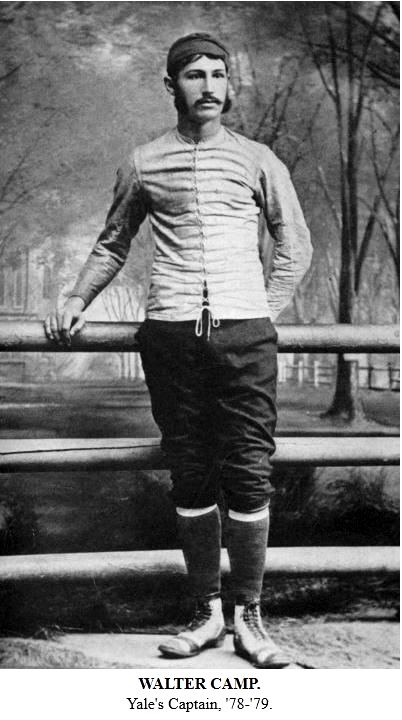
Who Invented Football?
Walter Chauncey Camp born in April 7, 1859, the “Father of American football,” was born in New Britain, Connecticut. Camp was a gifted athlete who participated in baseball, crew, swimming, tennis, and track. He excelled at football, however, and played for Yale for six years–four as an undergraduate and two as a medical student. Remarkably, Walter Camp was captain of both the freshman baseball and football teams, a testament to his athleticism. He later developed the “Daily Dozen,” a series of exercises for physical fitness used to train servicemen in World War I.
What is Football?
Football (also known as association football or soccer) is a team sport played between two teams of 11 players each. It is widely considered to be the most popular sport in the world. A ball game, it is played on a rectangular grass field, or occasionally an artificial turf, with a goal at each end of the field. The object of the game is to score by manoeuvring the ball into the opposing goal; only the goalkeepers may use their hands or arms to propel the ball in general play. The team that scores the most goals by the end of the match wins. If the score is tied at the end of the game, either a draw is declared or the game goes into extended time, depending on the format of the competition.
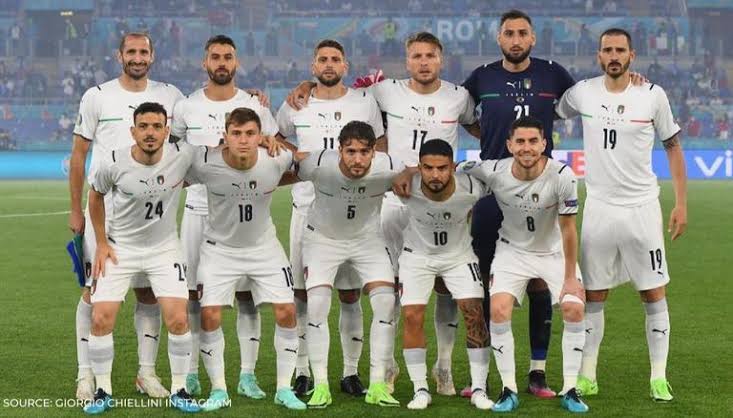
How many players in football?
Each of the two competing teams can have a maximum of 11 players on the field at any time. One of these has to be a goalkeeper while the other 10 are outfield players.
In addition to their starting XIs, teams also have additional players on their roster who are present in their respective team’s dugout during a match. The additional players are often called the bench.
The maximum number of players a team can have on their bench for a match can vary from competition to competition. The range, however, is a minimum of three and a maximum of 12.
Football Positions
As for the 11 players on the pitch, they can be broadly divided into four positions – goalkeeper, defenders, midfielders and forwards.
The latter three – defenders, midfielders and forwards, can be further divided into multiple positions.
While the one goalkeeper per team is a constant, the number of defenders, midfielders and forwards and their starting positions on the football pitch can vary according to the team’s formation or tactics.
Here’s a breakdown of all football positions and their roles.
Goalkeeper
A goalkeeper (GK) is essentially a team’s last line of defence. Generally seen in a different coloured jersey than the rest of the team, a goalkeeper usually stays in his own team’s penalty area, usually under the goalpost, to protect the goal. Goalkeepers are the only player on the football team who can use their hands to catch or control the ball, but only if they are in their own penalty box.
Goalkeepers are allowed to leave their respective penalty box but once they do, they will need to abide by the rules applicable to regular outfield players, i.e no using of hands.
Defenders
Defenders are usually the players in the playing XI, whose primary task is to defend their goal from opposition attacks. In modern football, though, even defenders tend to participate heavily in their team’s build-up play to initiate offensive moves.
Teams mostly play three to five players as defenders in a match. However, four at the back is the most commonly used tactic in modern football. Defenders can be further divided into the following categories according to their roles.
Centre backs: Centre backs (CB) or central defenders are centrally placed defenders just in front of the team’s goal. In a four-defender formation, teams generally utilise two centre backs while in a three or five-player backline involves three centre backs.
Centre backs are usually tall and physically imposing players with good aerial ability.
Full backs: The defenders who operate from either side of their centre backs are termed as full backs or side backs. Depending on which flank they operate in, they are further distinguished as a left back (LB) or a right back (RB). Besides defence, full backs often contribute offensively by charging up the pitch with overlapping runs to stretch the opposition defence.
If a team plays three centre backs and has two highly offensive full backs operating in the formation, they are also referred to as wing backs. Full backs are mostly quick with good positional sense.
Midfielders
As the name suggests, midfielders occupy the middle area of the football pitch and their role is to act as the link between defence and attack. Midfielders also have specialised roles and their position varies according to formations.
Central midfielders: Midfielders located centrally on the pitch are called central midfielders (CM). The number of central midfielders mostly depends on the team’s strategy.
If a central midfielder is tasked to primarily defend by staying in front of their backline, they are called central defensive midfielders (CDM). Players specialising as CDMs mostly have a high work rate and are good at tackling and interceptions.
More attack-minded central midfielders who prioritise supporting the forwards in attack rather than defence are called central attacking midfielders (CAM). CAMs generally possess the ability to play killer final passes and can shoot well from distance.
Central midfielders can also be neutral and try to contribute both defensively and offensively.
Wingers: Midfielders who operate from the flanks just ahead of the full backs are called wingers. They are called left wingers (LW) or right wingers (RW) according to their position on the pitch. While they do help their full backs defensively, a winger’s primary task is to attack and take on opposition defenders.
Traditionally wingers stay out wide and send in crosses into the opposition box for their forwards to finish.
In modern-day football, however, the concept of inverted wingers also exists. Inverted wingers are players who tend to cut in from wide and shoot at goal or assist a team-mate from a more central position. A left-footed player playing on the right wing or vice versa is considered ideal for inverted wingers.
Wingers are generally pacy, have good dribbling ability, can cross the ball well and are good shooters of the ball.
Forwards
Forwards or strikers are the team’s most advanced players on the pitch, whose job is exclusively to score goals. Hence, all forwards are great at finishing and often possess very good positional sense to find space for themselves in the opposition box. They can also be skillful, physically imposing or both, according to their style of play.
A forward who plays more centrally just in front of the opposition goal is called a centre forward (CF). More often than not, centre forwards are physically imposing and can both head and shoot the ball well. They are also good at holding the ball up by evading pressure from opposition defenders to allow their team-mates to run up and support in attack.
Sometimes centre forwards are instructed to drop deep to receive the ball and create goal-scoring chances for their team-mates instead of operating near the opposition box. In such cases, the centre forwards are also referred to as False 9s. It’s rare but some famous coaches like Pep Guardiola and Jose Mourinho have utilised the False9 in certain big match scenarios.
Some teams often deploy forwards in the lane between the wingers and the centre forwards. These strikers are referred to as right forwards (RF) or left forwards (LF) according to which side they are playing from. Generally fleet-footed, right forwards and left forwards can drift out wide or cut back in to trouble the opposition backline.
 Site Title